
Is 6 hours of sleep enough?
Thursday, May 16, 2024
IS 6 HOURS OF SLEEP ENOUGH?
How much sleep is needed by age?
Table of Contents
- How Much Sleep Do You Really Need By Age
- Negative Effects On Your Body
- What Your Body Needs
- How To Get Quality Sleep (AHM Coaches’ advice)
- Conclusion
Introduction:
Finding sleep on your busy schedule is like striking treasure gold – you feel lucky if you manage to get six precious hours of sleep, without distraction!
Whether you’re someone who has multiple work jobs, has kids, or big family….
Six hours of sleep isn’t enough.
Even a little sleep deprivation can greatly affect your energy, productivity, and health.
"What is sleep deprivation?"
It occurs when you fail to get the amount of sleep you need.
Some side effects include difficulty remembering things, trouble focusing, slow reactions, and trouble regulating emotions.
So…
How Much Sleep Do You Really Need By Age
Did you know that healthy adults need at least seven hours of sleep per night, while babies, and all the young ones need even more sleep to enable their growth and development?
If you’re sleeping less than seven hours, does this mean that you’re not healthy?
Let’s check the table below to see how much sleep you need depends on your age:
The National Sleep Foundation provides sleep guidelines for different life stages:
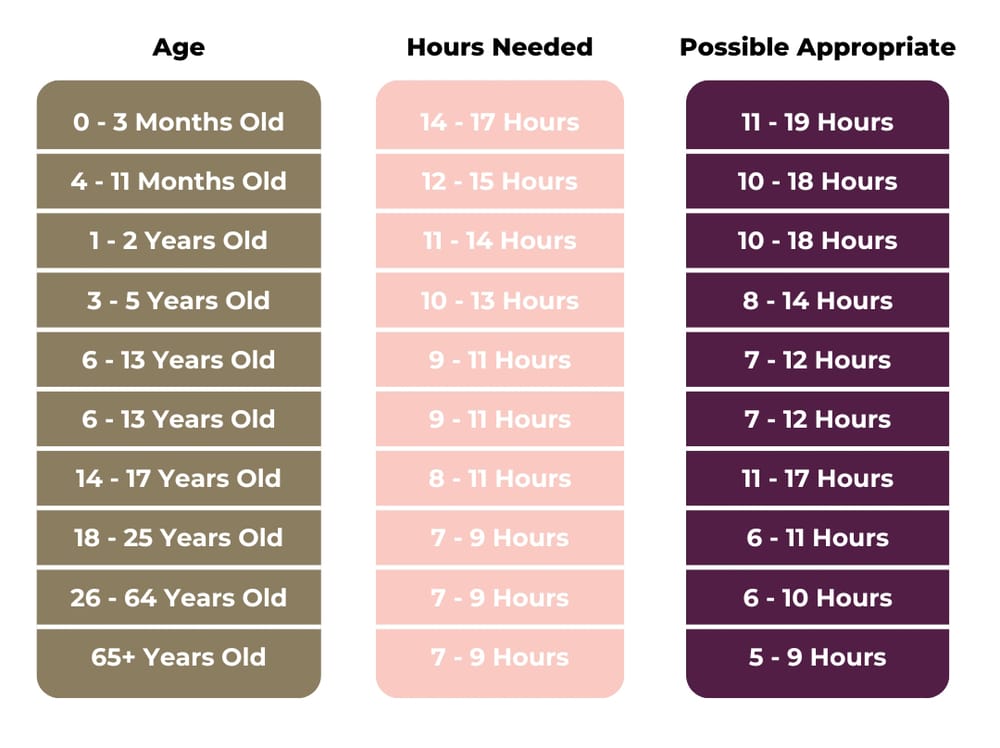
Based on this chart, the "Hours Needed" column indicates the number of hours recommended for maintaining a healthy lifestyle.
But taking less than seven hours of sleep doesn’t mean you’re not healthy.
We know how busy life is, and not everyone in this world can follow the guidelines.
However, studies show that our brains need at least seven hours of sleep to function properly.
If you're always lacking sleep due to a restless mind, restless leg, or insomnia, keep reading to learn how to solve it through the AHM program.
First, let's explore how insufficient sleep affects your body and brain, along with its side effects.
Negative Effects On Your Body
What happens when you don't get enough sleep?
It can be tempting to skip a sleep, especially when you have a lot on your plate, but testing your limits without rest is a bad idea and can harm you in the long run.
Here are...
Top 7 Negative Effects of Insufficient Sleep:
- Weight gain / Obesity
- Depression
- Memory issues
- Heart attack or high blood pressure
- Trouble concentrating or slow reaction time, which can be dangerous when driving or doing serious tasks
- Weakened immune system
- Mood swings.
We don’t want this to happen to anyone, especially you.
This is why here in Activa Hoop Program, we aim to help you manage your sleep better and find the perfect hours of sleep per day!
What Your Body Needs
Sleep is essential at any age because our body needs to:
- Support healthy brain function
- Improve our immune system
- Repair our body and build muscle
- Prepare us to be productive during the day
- Balance and support our emotional, hormonal, and mood health.
How To Get Quality Sleep
Have you ever found yourself googling "How to sleep?" or "How can I fall asleep fast?" when you just can't drift off?
You're not alone.
Many of us struggle with sleepless nights, tossing and turning, desperately seeking for rest, battling insomnia, or a restless mind.
When you can't sleep at night, you might reach for your phone, scroll through social media, or watch TV hoping to get drowsy.
These habits, while common, often make it harder to fall asleep due to the blue light and constant stimulation.
So, how do you get quality sleep when it feels impossible?
The Activa Hoop Movement Coaches provided these 5 practical tips in improving your sleep quality:
1. Avoid caffeine after noon
Most of us here are coffee lovers!
And we don’t want you to give this up. But as much as possible, avoid drinking caffeine at this time.
If you feel sleepy after lunch, try to go for a walk, get some fresh air, and drink lots of water.
2. Make your bedroom a sacred place
Prepare and reserve your room only for relaxing or calm activities such as sleep, reading, meditation.
A quiet, dark, and cool environment can significantly improve sleep quality, which is essential for recovery and weight loss.
3. Listen to relaxing music
Still can’t sleep? Try listening to white noise.
According to study, noise has a major impact on sleep.
A group of researchers found that white noise improves sleep quality as it helps clear your mind.
If white noise is not your choice, try listening to meditation music, ocean waves or rain.
4. Maintain a regular sleep schedule
We know it can be hard to follow a sleep schedule and be consistent about it.
But we’re confident that you can do it!
Take note of how much sleep you want to get and what time is best for you.
Try sticking to the same bedtime schedule and the wake time, every day, even on weekends.
Easier said than done? Maybe.
But the change will always start from you!
If you need further guidance, seek our coaches’ advice so they can help you manage your time.
5. Limit your exposure to screen
When we go to bed, we can’t help but to look at our screens one more time for some reason.
“Did I miss any email or message?”
“What’s my schedule for tomorrow?”
“My friend texted me!”
“I want to watch one more episode!”
Who’s guilty? Lol.
While these are common scenarios to most of us, experts say it can negatively impact our sleep as the blue light from screens affect our brains and eyes.
What we need is detox from that blue light.
Try to avoid bright screens from computers, tablets, and smartphones at least an hour before bed.
Read some books or wind down with a few relaxing yoga moves.

We know it takes effort to change habits, especially if you're doing the opposite.
But with practice and commitment, you'll build better habits that suit your needs.
Over time, these changes will become easier.
You got this!

Bonus: Taking a walk before bed can help to clear your mind and reduce racing thoughts, helping you relax and fall asleep more easily.
And if you're curious about how many steps you should walk per day, check out our next blog! 👇

If walking isn't for you, try a simple aerobic exercise. According to a study, Aerobic exercise can increase deep sleep.
It can be as simple as using a smart hula hoop 1-2 hours before you go to bed. This is really a game changer!
You can check out our smart hula hoop models here.

Conclusion
BOTTOMLINE
So…
Is 6 hours of sleep enough?
While it might seem adequate for a busy lifestyle, it's generally not sufficient for most adults because of the negative effects it brings to our body and mind.
Investing in 7-9 hours of sleep really enhances health, productivity, and overall quality of life.
That’s where this program comes in.
We will help you build good habits and stay consistent about it, as long as you’re committed. 💪
Simple adjustments in habits and sleep environment can help you achieve the restorative sleep your body needs.
Interested in smart hula hoop? Check out our latest models!
Lorem ipsum dolor sit amet, consectetur adipisicing elit. Autem dolore, alias,numquam enim ab voluptate id quam harum ducimus cupiditate similique quisquam et deserunt,recusandae.

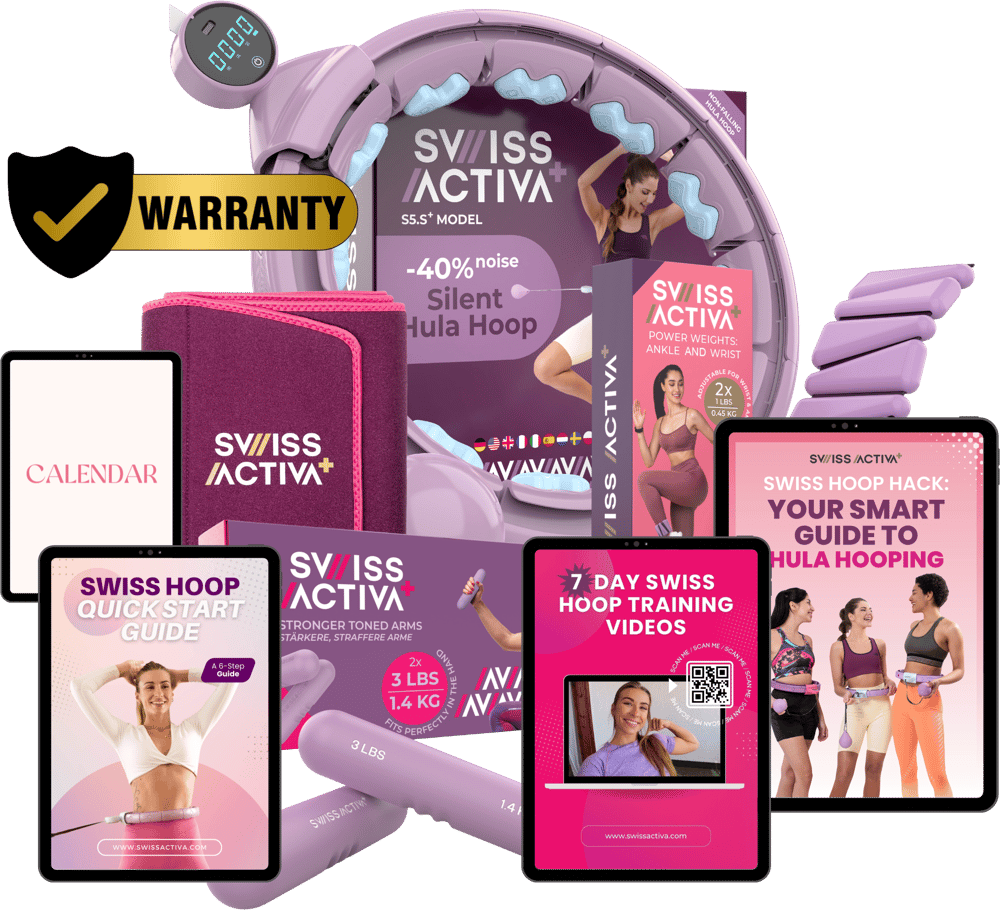
GET THE BUNDLES AT A SPECIAL DISCOUNT!
We're excited to announce that our Swiss Hoop bundles are now up to 60% OFF for a limited time!
Learn and build lifelong good habits with Swiss Hoop!